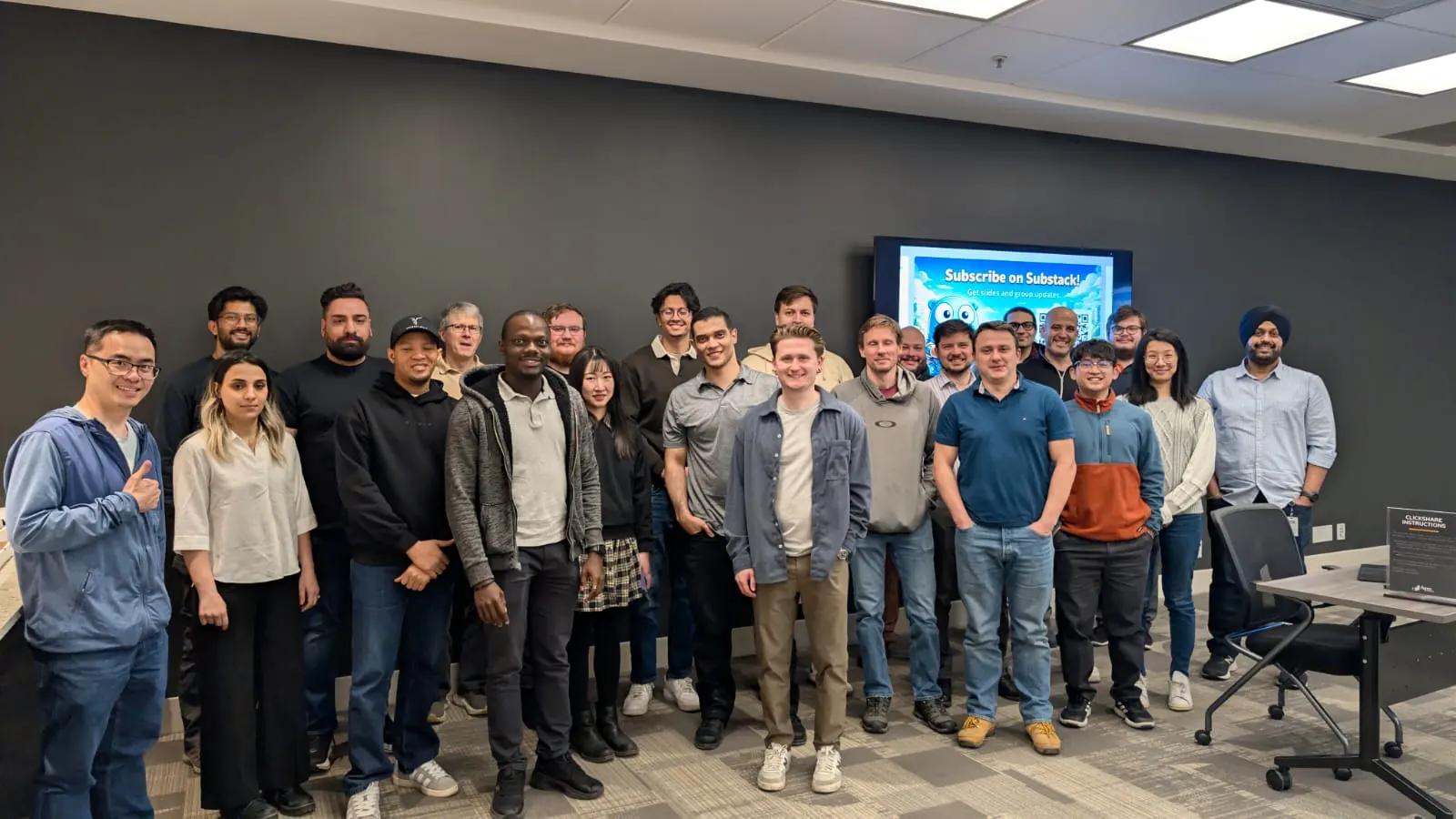
Yesterday we hosted the first-ever Golang Calgary meetup, and over 30 people filled the room. We had two talks, a recruiter Q&A and thoughtful questions all night.
LodgeLink supported and sponsored this first event. That backing helped us start the community with strong momentum. Here’s what we covered and how to join the next one.
Table of Contents
- What the first meetup showed
- What we covered
- Why you should come to a Go meetup
- How to join the next meetup
- FAQ
What the first meetup showed
We had a full room with over 30 people. The community brought great energy and asked thoughtful questions throughout the night.
That level of engagement on day one was a clear sign. Calgary has a strong and growing Go community.
What we covered
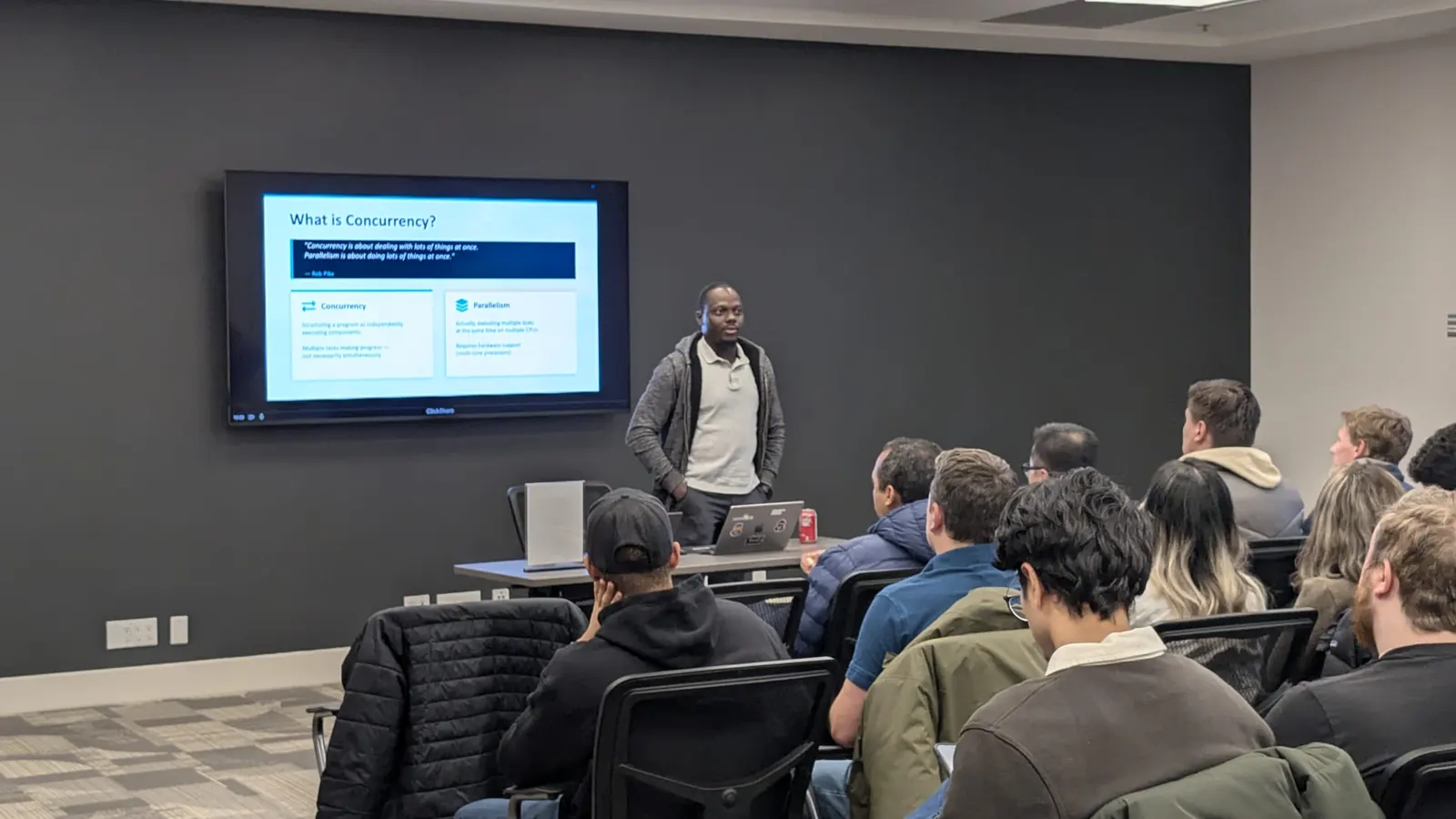
Adebayo: concurrency and parallelism
Adebayo opened with a practical breakdown of concurrency vs. parallelism in Go.
He covered the core mental models and implementation patterns that make Go so productive for backend and systems work:
- Goroutines and lightweight execution
- Coordination with channels
- Synchronization structures
- The G-M-P model at a high level
It was clear, practical and relevant for both newer and experienced Go developers.
My talk: the Go scheduler
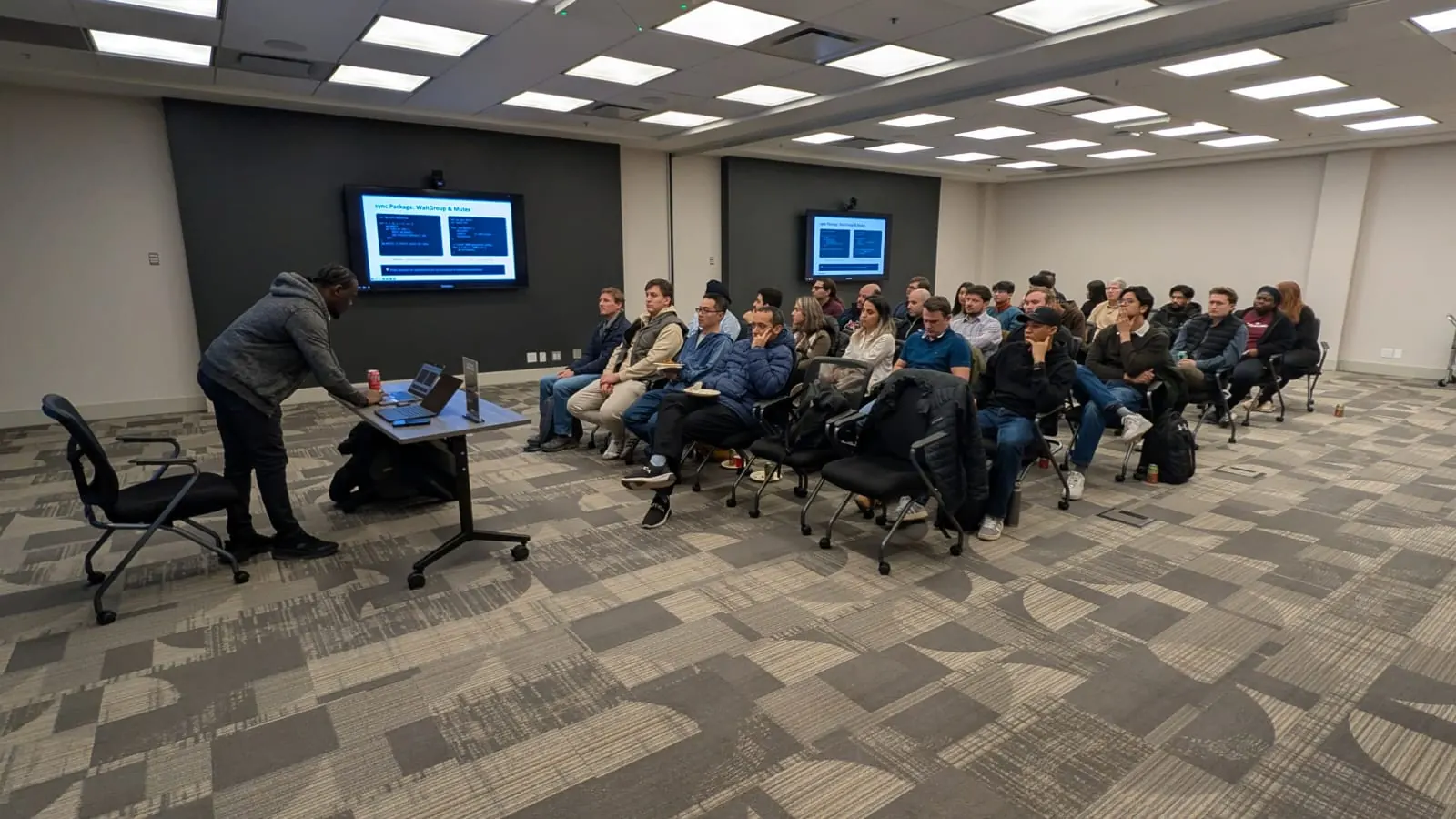
I shared a deep dive into the Go scheduler: how work gets mapped across goroutines, threads and CPUs.
We walked through:
- What is the scheduler
- Why is it important
- Local run queues (LRQ)
- Global run queues (GRQ)
- Work stealing
- Work handoff
- Preemption
- Scheduler limitations
The discussion after the talk was one of the best parts of the night. The talk is written up in full in how the Go scheduler works.
Recruiter Q&A with Procom
Between the talks, Emma Avery and Khaled from Procom joined us for a recruiter Q&A. They answered practical career questions from the room.
They shared what recruiters are looking for and how to position Go experience effectively. They also covered how candidates can stand out in a competitive market.
Why you should come to a Go meetup
Meetups like this are where developers turn concepts into practical experience. You compare approaches, ask hard questions, and learn how others solve production problems.
For me, the biggest win was the mix of people. Platform engineers, backend developers and learners shared ideas in the same room.
How to join the next meetup
We’re just getting started. If you’re in Calgary and working with Go, or want to, join us at the next meetup. We’ll keep the talks practical, technical and community-focused.
- Subscribe to our Substack for the slides from this event and updates on upcoming meetups: golangcalgary.substack.com
- Join our LinkedIn group to connect with the community: Golang Calgary LinkedIn Group
- Read up before you come. The production side of running Go services is in Go microservices in production.
Huge thanks to everyone who joined, participated and helped make the first event a success. Special thanks to LodgeLink for supporting and sponsoring this first edition of Golang Calgary.
FAQ
Where can I get the slides from the first Golang Calgary meetup?
Subscribe to the Golang Calgary Substack. It has the slides from this event and updates on upcoming meetups.
What talks were at the first Golang Calgary meetup?
Adebayo spoke on concurrency and parallelism in Go, and I gave a deep dive into the Go scheduler. Between the talks, Procom ran a recruiter Q&A.
Who can attend Golang Calgary?
Anyone in Calgary working with Go, or wanting to. The first event drew platform engineers, backend developers and learners.